

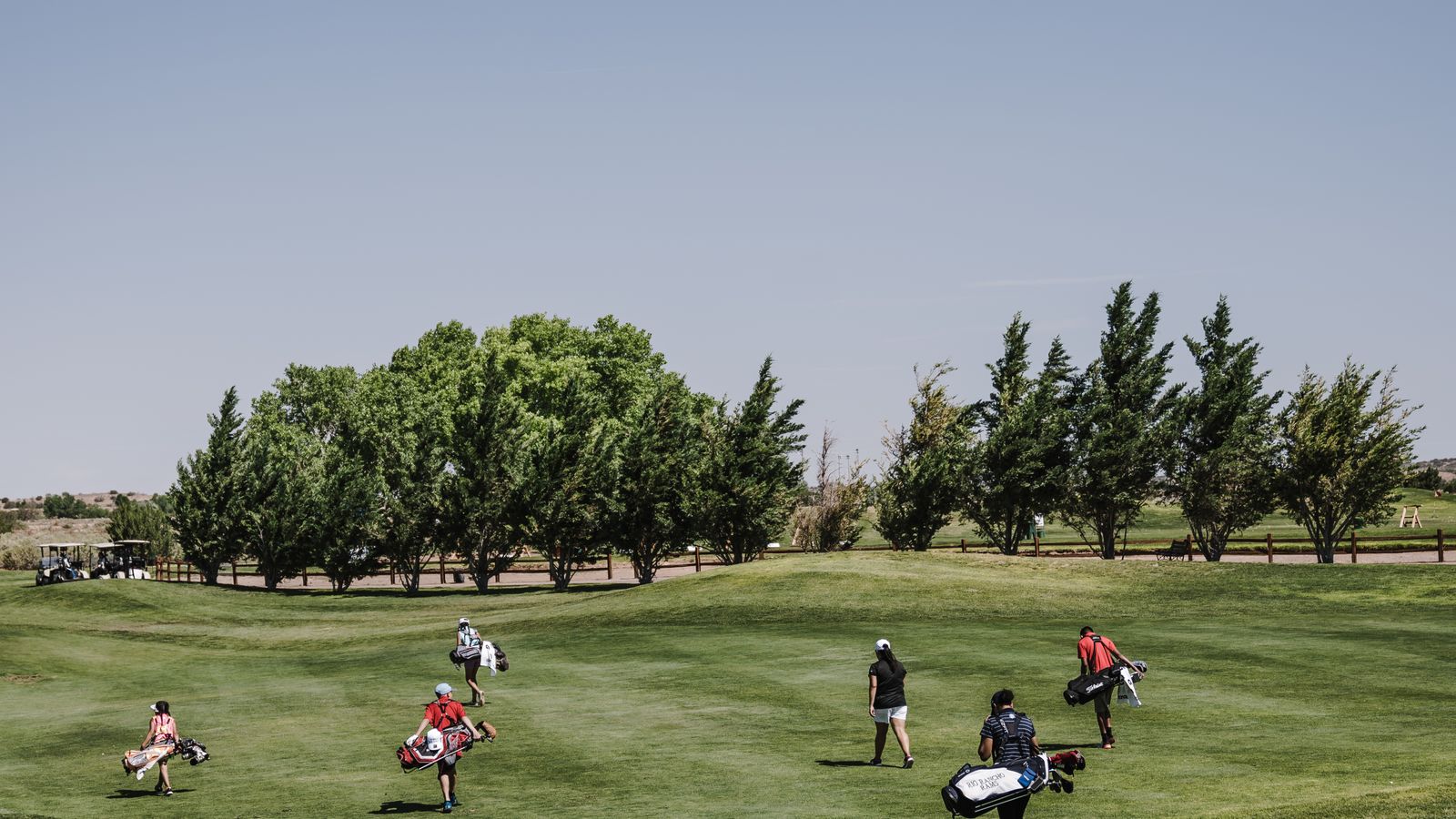
Over the past two years, I've played dozens of rounds of golf as a single. I rarely know who I'll be paired with until I arrive at the first tee. Every round begins the same way: a handshake, a few awkward introductions, and four strangers wondering how the next four hours are going to go.
Then something happens.
I've played with a 12-year-old trying to break 90 for the first time and a 74-year-old who had forgotten more about golf than I'll ever know. I've walked fairways with construction workers, police officers, teachers, mechanics, doctors, software engineers, retirees, small business owners, and CEOs. Republicans. Democrats. People with plenty of money and people worried about paying the bills.
For four hours, none of it mattered.
We talked about our kids. We celebrated great shots and laughed at terrible ones. We searched the woods for each other's golf balls. We gave reads on putts, complimented good swings, and found something encouraging to say after a bad hole.
Nobody asked who anyone voted for. Nobody cared what neighborhood anyone lived in. Nobody was trying to win an argument.
We were four people trying to get a little white ball into a hole.
It's made me wonder whether golf accidentally creates something our society is short on.
The game forces patience. It gives people time to talk without shouting over each other. There are quiet moments between shots where conversation drifts toward family, work, hobbies, whatever's going on at home. You learn who someone is instead of what label they wear.
Golf also humbles everyone. A CEO who runs a billion-dollar company can top a drive 30 yards. A teenager can outplay someone four times his age. Success in life doesn't guarantee success on the course, and a disaster on one hole doesn't stop the next one from being a fresh start.
Maybe that's why people connect out there. For a few hours, everyone is equal. Everyone hits bad shots. Everyone gets lucky bounces. Everyone has something to teach and something to learn.
There's an old idea — much older than golf — that some things can't be forced, only allowed. Golf teaches it every round: swing easy and the ball flies; grip tighter, want it more, and the game falls apart. I've come to think connection works the same way. Nobody standing on the first tee is trying to make a friend. Maybe that's exactly why it happens.
The more I play with strangers, the more convinced I am that most people are good. Not perfect. Good. Quick to congratulate someone they just met, willing to help look for a lost ball, genuinely happy when a stranger drains a long putt.
It's hard to walk beside someone for four hours and come away believing we're as divided as we're told.
Maybe things would look different if more conversations happened on fairways instead of behind keyboards.
Golf won't solve every problem.
But over the last two years, it has reminded me of something easy to forget:
Most people are far more alike than they are different.
Sometimes all it takes to discover that is eighteen holes.